- 5/17/2026
- Updated 5/17/2026
What Is Polling Rate on a Keyboard? A Typist-Friendly Explanation
Polling rate is how often the PC asks the keyboard for updates—not how fast you type. Learn Hz in plain language, why 1000 Hz is common, and what changes for essays versus games.
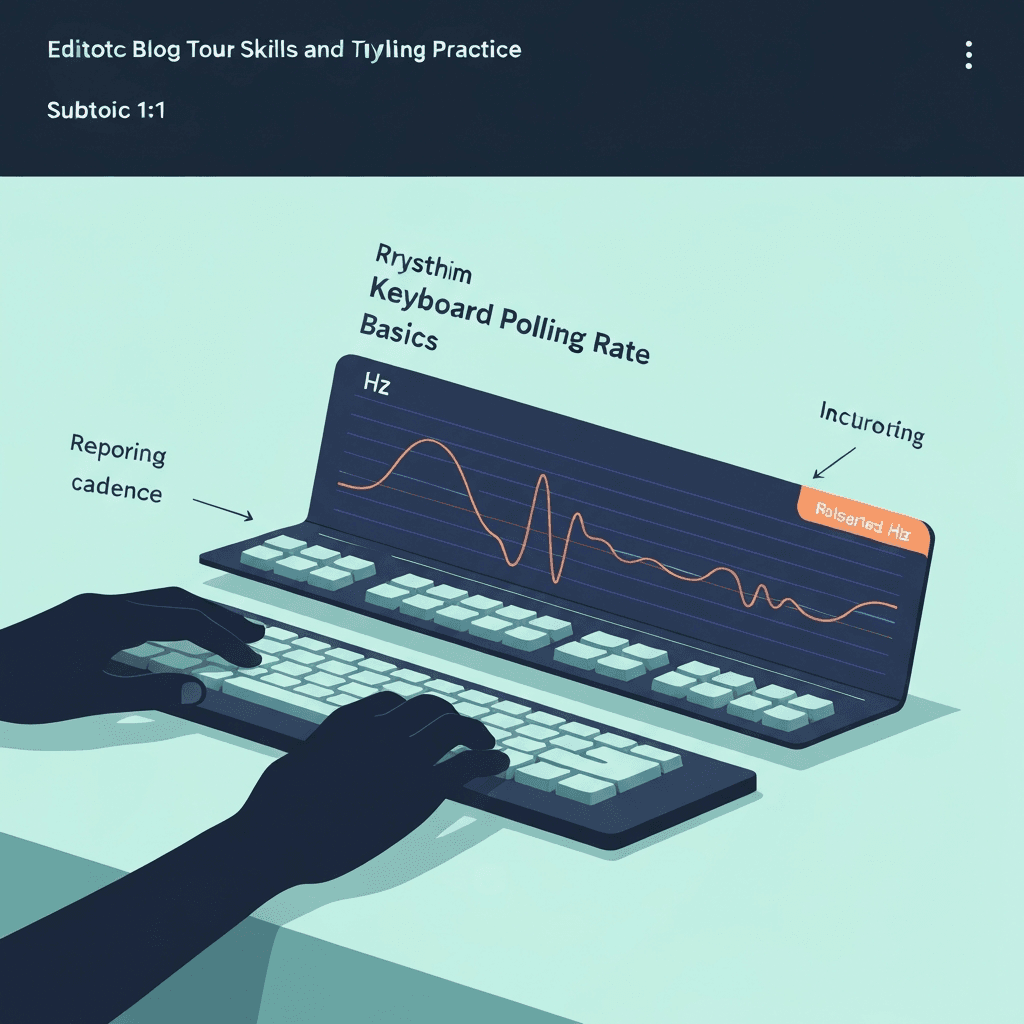
Hz is samples per second, not words per minute
A 1000 Hz keyboard polling rate means the host can read the device up to one thousand times each second. Each read is a snapshot of which keys are down.
Your fingers still move at human speed. Polling changes how quickly a new press appears in software, not how fast you can form sentences.
Close heavy tabs before sampling; compositor scheduling can widen gaps that look like low polling.
Close heavy tabs before sampling; compositor scheduling can widen gaps that look like low polling.
Try the polling rate primer
Tap steadily to sample gaps between keydown events in this browser—approximate Hz tiers for comparing setups, not a certified USB descriptor readout.
Open polling rate primerFirmware, USB, and drivers sit in the middle
The switch may actuate once, but the report might wait for the next poll window. Cheap hubs, Bluetooth bridges, and power saving stretch that wait.
Marketing “8000 Hz” labels describe the keyboard side; your browser test shows the path you actually use for work.
Compare wired and Bluetooth on the same browser profile so OS differences do not masquerade as keyboard quality.
Screenshot tier labels when IT asks for proof; approximate Hz language is clearer than subjective “sluggish.”
When the spec matters for typing
Fast rolling bursts and tight modifier chords benefit from consistent 1 ms spacing. Pure home-row prose often feels the same between 500 Hz and 1000 Hz on a healthy setup.
Use the free polling lab once when you change boards or cables, then focus on accuracy drills.
Screenshot tier labels when IT asks for proof; approximate Hz language is clearer than subjective “sluggish.”
Treat 8 kHz marketing as a ceiling; debounce and transport still dominate what prose typists feel day to day.
Continue practicing
This cluster is about Hz and event spacing. Run the polling primer to compare setups, then use the latency sampler and a timed test when feel and scores matter.