- 5/22/2026
- Updated 5/22/2026
What Is Steno WPM? How Timed Brief-Form Scores Work
Steno WPM on Type Faster counts each correct brief-form outline as one word—not the QWERTY five-character rule. Learn how timed drills score speed and accuracy.
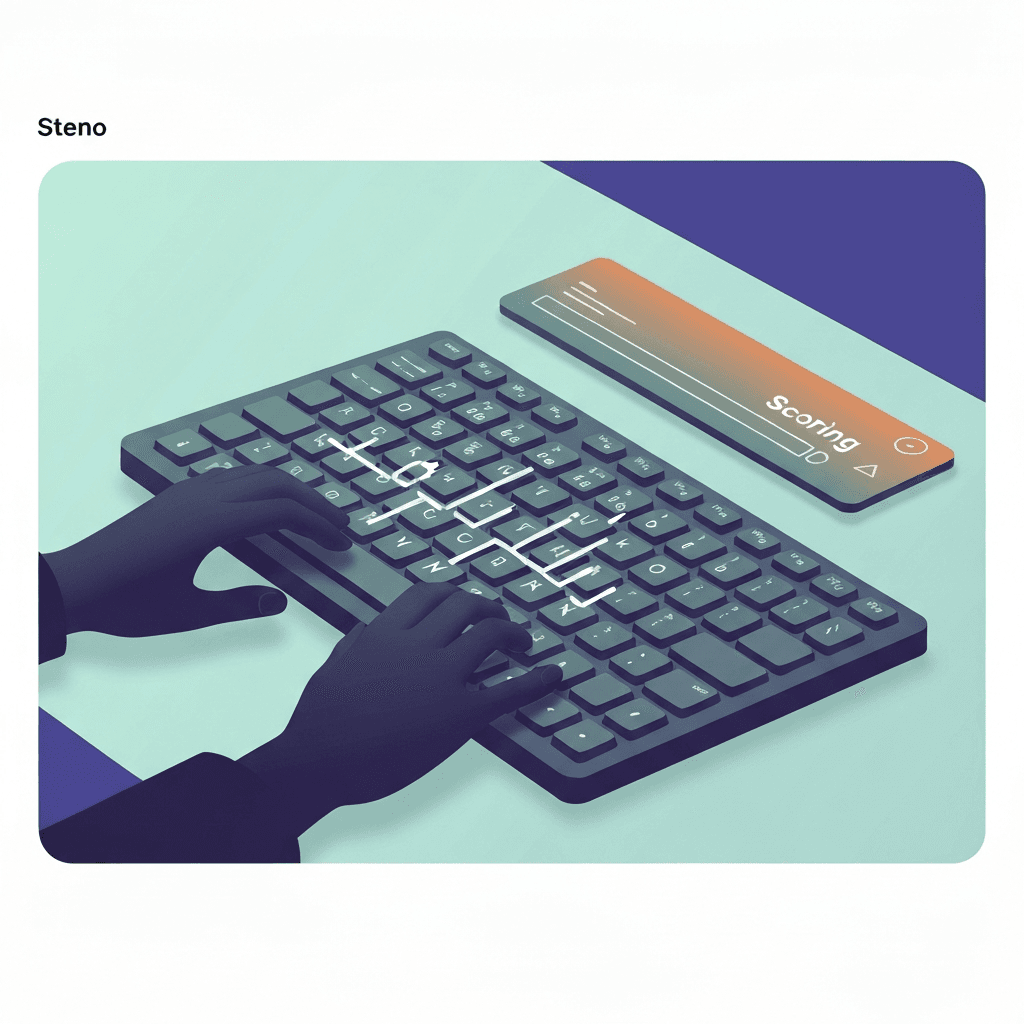
One outline, one word
In court reporting and machine steno, a single stroke or brief can represent a whole word. Type Faster timed modes follow that convention: each **correct** outline in a session increments the word count by one, regardless of how many QWERTY keys you pressed to form it.
Elapsed time starts on your **first keystroke**, not when the page loads—so you can read the prompt before the clock runs.
Import only dictionaries you are licensed to use; built-in brief forms are enough for the first month.
Compare Steno WPM to prior steno sessions, not to QWERTY one-minute tests on the same day.
Interactive Practice
Try this 1 minute tool right here
Run the same test discussed in this article without leaving the page.
Compare honestly to QWERTY WPM
A 120 Steno WPM run is not directly comparable to a 120 QWERTY WPM one-minute test. Use Steno WPM to track steno-practice progress; use standard tests for full-keyboard prose speed.
Chord timed mode uses the same word rule: each released chord that matches the target counts as one word when correct.
Import only dictionaries you are licensed to use; built-in brief forms are enough for the first month.
When chords drop keys, fix rollover or hand tension before you chase higher brief-form speed.
Continue practicing
The in-page typing tool matches this article’s duration preset. Open the full test for other durations and settings, or jump into a drill to target weak keys.