- 5/20/2026
- Updated 6/10/2026
Python Typing Test: Symbol-Heavy Lines and Locked Track Practice
Practice a three-minute Python programmer symbols test with colons, indentation rhythm, underscores, and call punctuation from the locked Python track—benchmark honestly against prose WPM.
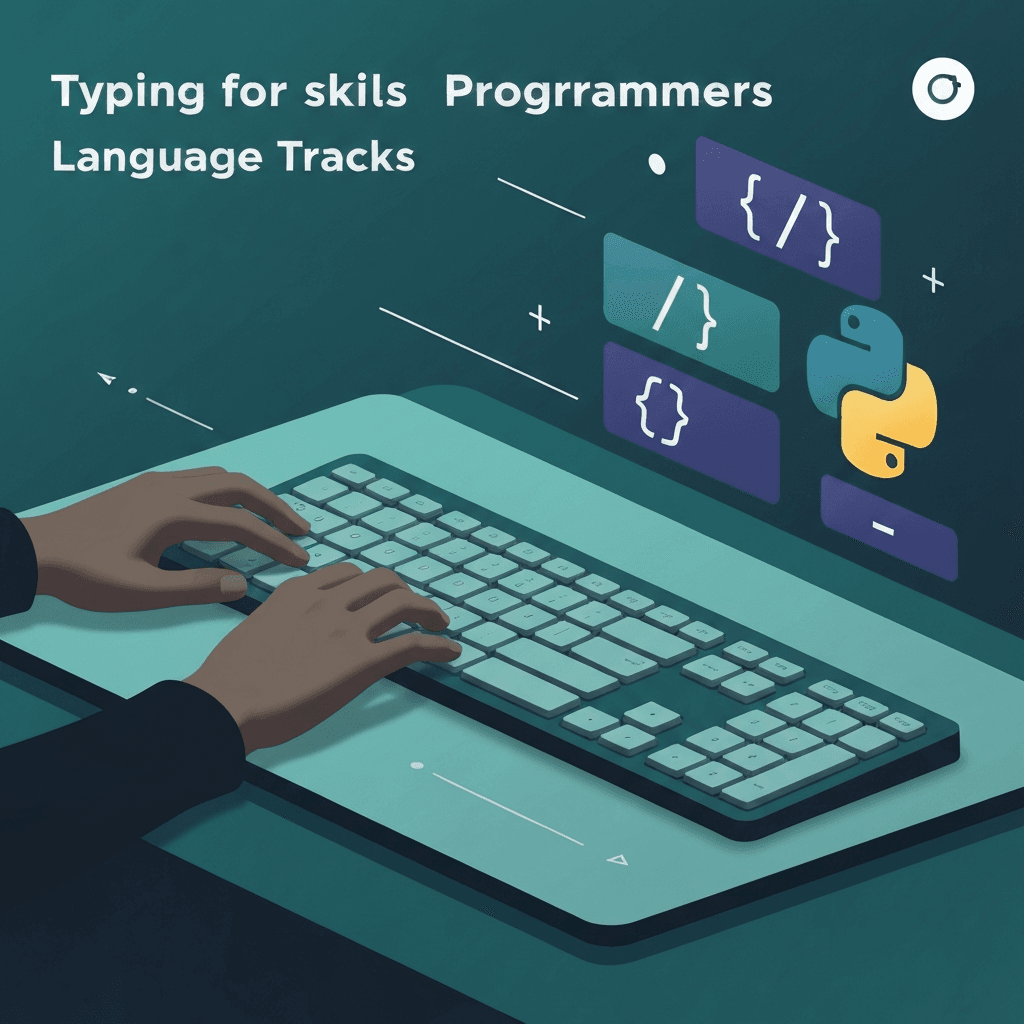
Python snippets, not generic prose paragraphs
This guide’s in-page test loads symbol-heavy lines from the Python track in Type Faster’s programmer corpus—colons after blocks, parentheses in calls, underscores in names, and the operator mix you see in scripts and notebooks. Scores use the same five-characters-per-word rule as other timed tests, but character density mirrors IDE work more than a plain English paragraph.
Python rewards whitespace discipline: every block opens with a header, colon, newline, and indent. When those transitions stall, your eyes leave logic to count spaces even if letter speed looks fine on prose benchmarks. Track-locked practice surfaces that structural tax honestly.
| Topic | Detail |
|---|---|
| Colon blocks | if, for, def, and class headers typed as one motion. |
| Call punctuation | Parentheses, commas, and kwargs without pauses. |
| Identifiers | snake_case underscores at conversational pace. |
| Operators | Comparisons, slices, and f-string braces in flow. |
Indentation-heavy depth work pairs with python indentation typing practice once baseline symbol rounds feel stable. Colon rhythm and block depth are separate skills that share the same editor muscle memory.
When learning a new framework, expect symbol throughput to dip temporarily. That is normal; rebuild speed on the new vocabulary with short daily exposure rather than occasional cramming.
Why lock the language track instead of mixing the corpus
When you practice Python only, repeated patterns match the files you edit: string quoting, nesting, and operators that differ from JavaScript or Rust lines in the same corpus. The embedded test below is pinned to this track. Open the full programmer test with the same track query when you want every option, structured multiline mode, or snippet reporting.
Mixed-track practice helps general symbol fluency but blurs weekly trends. If Monday’s score jumps because the prompt was mostly JSON, you cannot tell whether Python handlers improved. Lock the track for benchmarks; mix tracks only on intentional cross-training days.
1
Colon rhythm
2
Bracket density
3
Headline WPM
4
Weekly trend
Choose tracks confidently from programmer symbols by language when you maintain multiple stacks. The hub explains corpus grouping without forcing you to guess which embed matches your repo.
New to symbol tests? Read best typing practice for programmers before you chase peak WPM on day one—accuracy on pairs precedes speed on snippets.
Compare Python symbol WPM honestly against other modes
A strong programmer-symbol WPM does not always match your one-minute prose benchmark—and that is expected. Python lines add colons, indents, and underscores that prose ignores. Track week-over-week improvement on this three-minute mode, then sanity-check with a standard typing test when you want a headline number for non-technical readers.
Interpret tiers with average WPM for programmers so you separate symbol stability from vanity peaks. Hiring screens rarely ask for Python track scores, but editor fluency still compounds through sprints and code review throughput.
Example track index
Backend weeks mixing ORM and shell scripts benefit from shell command typing muscle memory on alternate days so terminal punctuation does not collide with editor colons in one fatigued session.
Data-heavy Python often sits beside JSON payload typing practice and SQL query typing speed. Split metrics when your job is multi-language—one track score should not stand in for entire stack fluency.
Notebook users who jump between markdown cells and plain modules should log whether errors cluster on magics or shell escapes. The Python track covers common source shapes; your transfer check should include the environments you actually run.
Weekly rhythm for locked-track Python benchmarks
Sustainable practice is one locked-track benchmark, two short colon or call-punctuation rounds, and one transfer snippet typed from memory. Total time under twenty minutes fits standups-heavy weeks better than irregular hour-long sessions that produce noisy trends.
Monday
Three-minute embedded benchmark; log first colon stall.
Wednesday
Colon or def-header drill at controlled pace.
Friday
Transfer snippet from this week’s repo work.
Review
One adjustment—never reset everything at once.
Reinforce pair closure through developer symbol drills when errors cluster on parentheses rather than colons. Splitting families prevents vague “accuracy felt bad” notes that do not pick the next drill.
Teams on TypeScript frontends should alternate TypeScript generics practice on separate days. Context switching exposes whether Python colon habits survive semicolon-heavy files.
Paste redacted functions into custom practice for typing growth only after track benchmarks plateau. Custom lines should mirror field names you type weekly—not tutorial variables that never appear in review.
Keep a single notebook field for track embed version and Python minor version if your team upgrades interpreters often. Syntax highlighting changes rarely affect typing, but string quote habits can shift when formatter defaults move.
When you switch stacks, return to the matching guide
“Run the three-minute Python embed, then type one function you edited this week from memory—colons, indents, and docstring included. If errors cluster on block opens, return to indentation drills before raising speed.”
Language switches at work are normal. When your primary repo changes, come back to the matching track guide so the in-page tool and corpus stay aligned with the stack reviewers see in pull requests.
Regex-heavy cleanup weeks add regex pattern typing practice for quote and escape transitions beside indented parsers.
Debugging throughput still depends on log-shaped symbols—see debugging log typing speed when production triage dominates Python services.
Python typing mastery is track-locked honesty: three-minute symbol benchmarks, colon-aware drills, and weekly transfer checks that respect how whitespace-heavy languages actually feel in the editor—not how fast you type email.
Notebook-heavy roles should add a few data-science-shaped lines—pandas-style chains, dictionary comprehensions, and pytest asserts—once baseline handler snippets feel automatic. The track corpus covers common patterns; your transfer check should mirror the modules you ship.
Compare against programmer typing JavaScript only on separate benchmark days. Cross-language scores on the same afternoon confuse fatigue with stack difficulty and encourage emotional reruns that waste time.
Continue practicing
The in-page typing tool uses Python symbol snippets only. Open the full programmer test with the same track, or browse the language hub for other stacks.