- 5/18/2026
- Updated 5/18/2026
Mechanical Keyboard Typing Preflight for Daily Drivers
Mechanical keyboard owners should preflight after spring swaps, lubing, or travel. Key map, latency, and debounce catch issues hot-swap fixes can introduce.
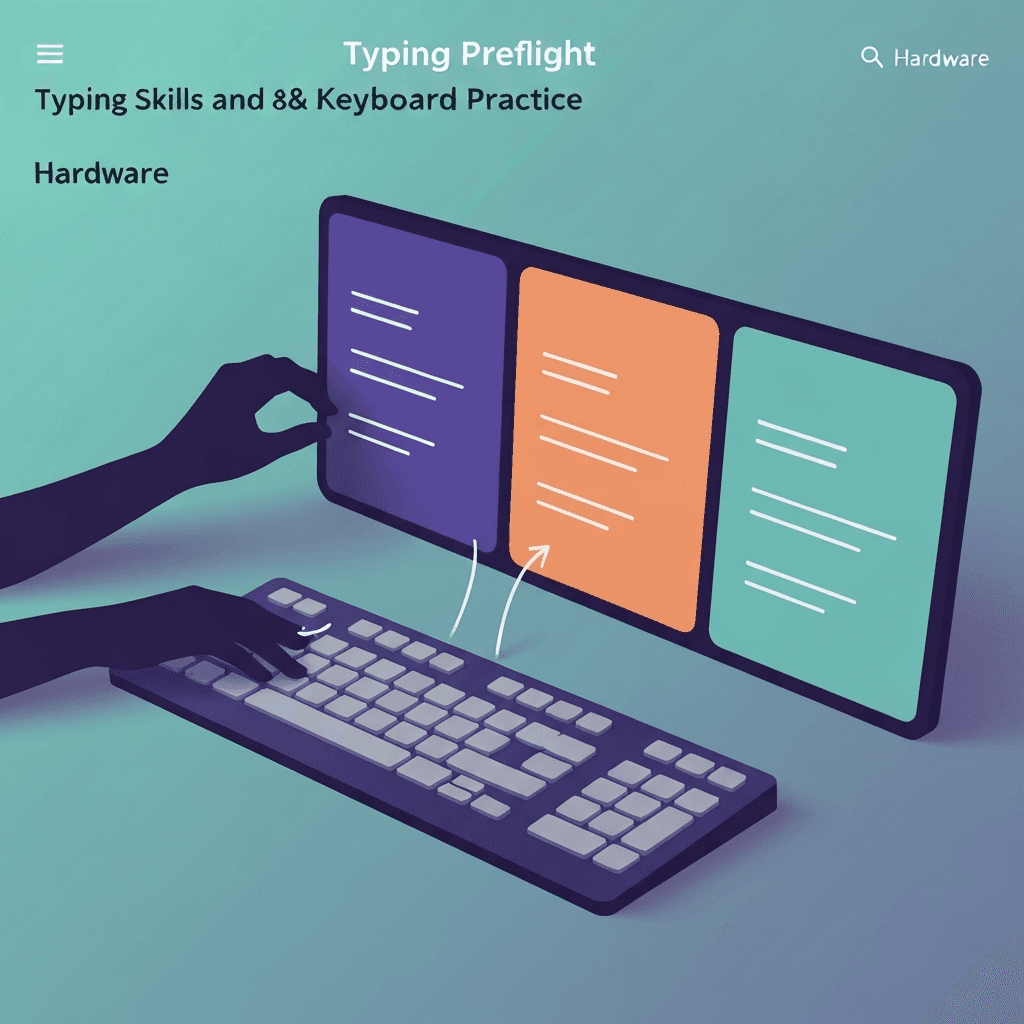
Builds change without announcing it
A replaced switch in the letter row can sit slightly high and miss registration. The key map step finds it before a scored run.
Stabilizer rattle is annoying but separate from missed key reports.
Tap one letter lightly in debounce step three; holding triggers OS repeat, not switch chatter.
Tap one letter lightly in debounce step three; holding triggers OS repeat, not switch chatter.
Try typing preflight
Walk the key map, sample browser latency, and check debounce in one checklist—then read your boarding pass before a timed WPM test.
Start typing preflightFirmware profiles move latency
Gaming mode, polling overrides, and wireless power saving alter step two results. Test the profile you will type in tomorrow.
Wired baseline versus Bluetooth is the comparison that matters for travel kits.
Tap one letter lightly in debounce step three; holding triggers OS repeat, not switch chatter.
Tap one letter lightly in debounce step three; holding triggers OS repeat, not switch chatter.
Chatter after lubing is real
Over-lubed tactile switches sometimes double-tap electrically. Step three is the fastest sanity check before you declare the build “broken.”
If only one key chatters, swap the switch before re-lubing the whole board.
If preflight passes but WPM still swings, compare passage difficulty before buying hardware.
Revisit the checklist weekly during certification prep; daily obsession adds noise without signal.
Continue practicing
This cluster is about benching before you benchmark. Run the three-step preflight when setup changes, read the boarding pass, then open a one-minute test with fewer hardware surprises.