- 6/8/2026
- Updated 6/8/2026
Average WPM for Programmers: Benchmarks That Actually Help
Use practical WPM and symbol-accuracy bands for programmers, then benchmark with a five-minute symbols test so speed goals improve real coding output.
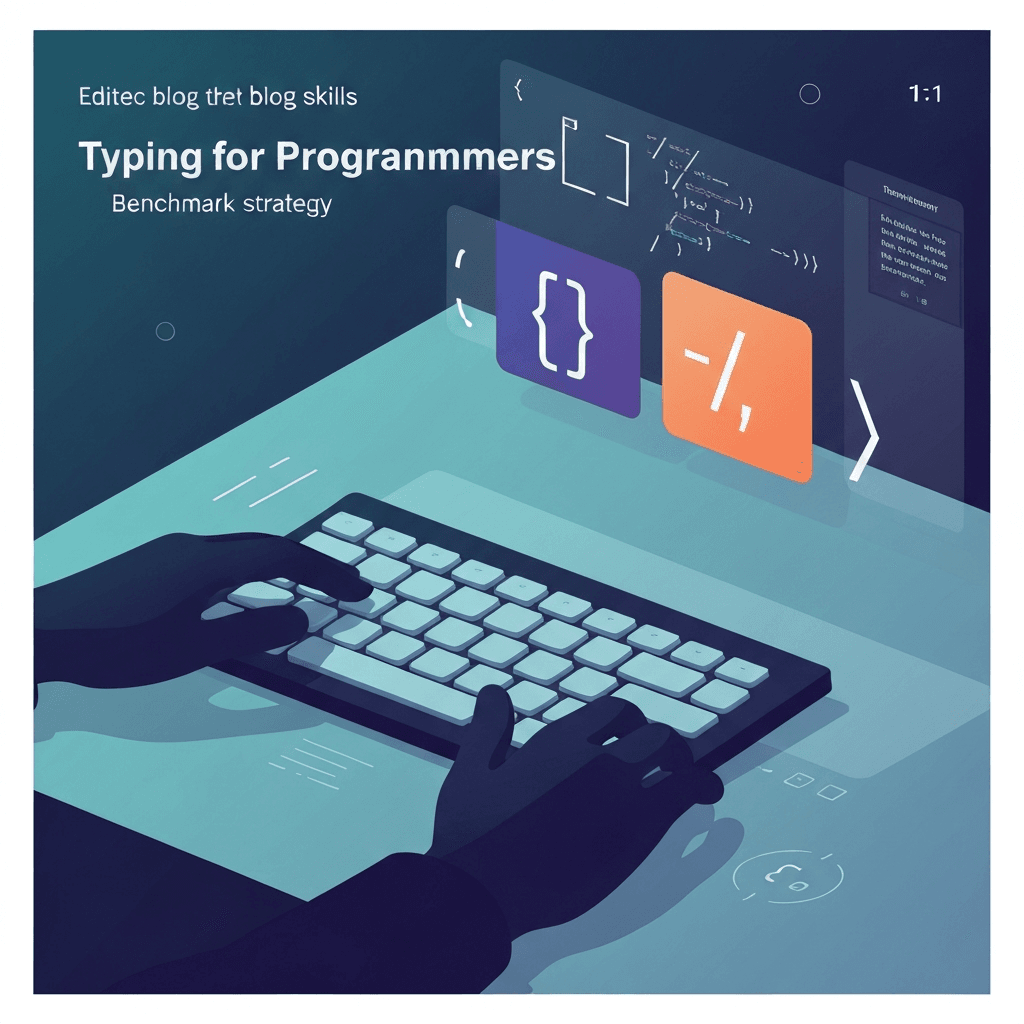
Why average WPM alone misleads programmers
A single WPM number is useful for motivation, but it can hide the exact bottleneck that affects coding output. Most developers do not lose time on plain words; they lose flow on punctuation transitions, bracket closure, and quick symbol shifts between letters and operators. That is why a programmer benchmark needs both speed and symbol stability, not speed alone.
When you compare your current baseline to developer symbol drills and brackets punctuation practice, you can see whether your score gap comes from rhythm or syntax-specific friction. This comparison prevents the common mistake of grinding generic prose tests while your real coding bottleneck remains untouched.
A five-minute benchmark is valuable because it reveals whether early confidence survives sustained symbol density. The test on this page is tuned for programmer characters, so your result reflects syntax handling patterns instead of casual paragraph comfort. That makes your weekly trend far more relevant to pull requests, debugging notes, and implementation sessions.
Primary timer
Val 5
Core signals
Val 2
Weekly baseline
Val 1
Supplement sessions
Val 34
If you want a simpler entry point, start with best typing practice for programmers, then return to this benchmark framework after one week. You will interpret your numbers better when your sessions already separate warm-up, benchmark, and correction drills.
Set realistic benchmark tiers for coding work
Useful tiers are not about ego; they are about planning effort. A practical programmer tier model should indicate how often symbol transitions break your flow and how quickly you recover without panic corrections. Use tier language as a map for training priorities, not as a permanent identity label.
| Tier | Observed pattern in symbol-heavy tests | Recommended focus |
|---|---|---|
| Foundation | Frequent pauses on brackets, quotes, and operators | Stabilize syntax transitions before pushing pace |
| Operational | Mostly stable rhythm with occasional symbol clusters causing dips | Build endurance with mixed snippets |
| Fluent | Consistent flow across symbols with fast recovery from minor misses | Refine precision in longer sessions |
Developers moving between stacks can use links like TypeScript generics practice and SQL query typing to compare where tier behavior changes. If your tier drops only in one context, your issue is likely language-specific muscle memory, not global speed.
The same method helps interview prep. You can preserve confidence by practicing in the syntax style closest to your target role instead of over-indexing on generic passages. Tier movement is slower than daily score swings, but it is a stronger predictor of real coding typing comfort over a month.
Use paired characters deliberately: type the closing bracket as part of a planned motion, not as a reaction after you realize it is missing.
Track speed and symbol accuracy together
Programmer typing progress accelerates when your dashboard mindset changes from single-metric chasing to paired-signal interpretation. WPM tells you throughput potential, while symbol-aware accuracy tells you whether that throughput survives practical syntax. Improvements in only one signal are still useful, but they lead to different next actions.
For example, if WPM rises while symbol consistency stalls, route your week toward regex pattern drills or API response typing. If both metrics stall, revisit workload and recovery before adding harder snippets.
Example benchmark index
A paired-signal review also reduces emotional overreaction. One rough day no longer feels catastrophic when your multi-week line still trends healthy. This perspective is especially useful for developers balancing coding output, meetings, and context switching, where test-day energy naturally fluctuates.
If you contribute frequent review comments, compare your symbol trend with code review and debugging workflows. Those environments expose practical punctuation fatigue quickly, and they often reveal why your benchmark feels easier than your actual workday.
Design a weekly benchmark routine that compounds
A useful benchmark routine should be simple enough to survive busy weeks. Keep one five-minute anchor run, one brief notes review, and two to three focused correction sessions based on the weakest symbol pattern. This minimal structure keeps your data trustworthy without turning typing practice into project management overhead.
“Do not change timer, text style, and training theme all at once. Keep measurement stable, then tune one variable per week so trend interpretation stays clear.”
When your anchor run is stable, add targeted practice through programmer symbol drills. If your role is JavaScript heavy, route extra sessions through JavaScript track guide to keep transfer quality high.
This routine works because it combines consistency with adaptation. You preserve a comparable benchmark lane while still addressing real friction points from the week. Over a quarter, that balance usually delivers stronger gains than random daily test choices driven by mood or available time.
Most importantly, keep notes short and honest. One sentence about where rhythm broke is enough to choose your next drill. Long post-session analysis looks productive, but concise pattern capture is what keeps practice sustainable and repeatable.
Use benchmark data to choose the next milestone
After four weeks, your data should answer one question clearly: what kind of gain matters most now. Some developers need smoother symbol control at current pace, while others need endurance at higher throughput. Let your pattern decide the milestone so your next month has a focused objective instead of generic speed chasing.
If your milestone is stability, continue symbol-first sessions and avoid aggressive pace jumps for one cycle. If your milestone is speed, increase challenge gradually but keep weekly anchor conditions fixed. Either way, you are building a data-informed loop that supports reliable growth in real development workflows.
This is the core ROI of programmer benchmarks: fewer random practice choices, clearer training priorities, and better transfer from typing tests to coding output. Run the embedded five-minute test, log one actionable insight, and let that insight drive the next session with intention.
A practical checkpoint at the end of each cycle is whether your benchmark language now sounds operational in plain speech. You should be able to say what improved, what stayed unstable, and what next week targets. If your review still sounds vague, your drills may be too scattered. Better specificity in notes almost always leads to better specificity in results.
Another useful review lens is transfer friction during real coding blocks. If benchmark gains are real, everyday typing inside editors should feel less stop-and-go when you move across punctuation, identifiers, and delimiters. If editor flow stays noisy despite better test scores, route one week toward realistic snippet drills and reduce pure benchmark volume until transfer catches up.
You can also segment milestones by workload context. Some developers care most about review comments, others about debugging speed, and others about implementation throughput. Benchmark data becomes more actionable when each milestone maps to one dominant work context. This prevents broad goals from diluting effort and helps you choose drills that matter to day-to-day output.
Over time, this framework turns typing practice into a lightweight performance system rather than an occasional challenge test. The system is simple: stable measurement, honest interpretation, focused correction, and repeat. That loop protects motivation because progress is tied to clear behaviors you can control, not to random score swings that are hard to explain.
Continue practicing
The in-page typing tool uses programmer-symbol text. Open the full programmer test for every option, or visit the language hub for track-specific guides.