- 5/16/2026
- Updated 5/16/2026
Retesting the Same Passage: WPM Swings, Memorization, and Cheating Boundaries
Scores jump when you memorize a passage. Learn when retests are fair practice, when they inflate WPM, and how coaches should interpret same-text gains honestly.
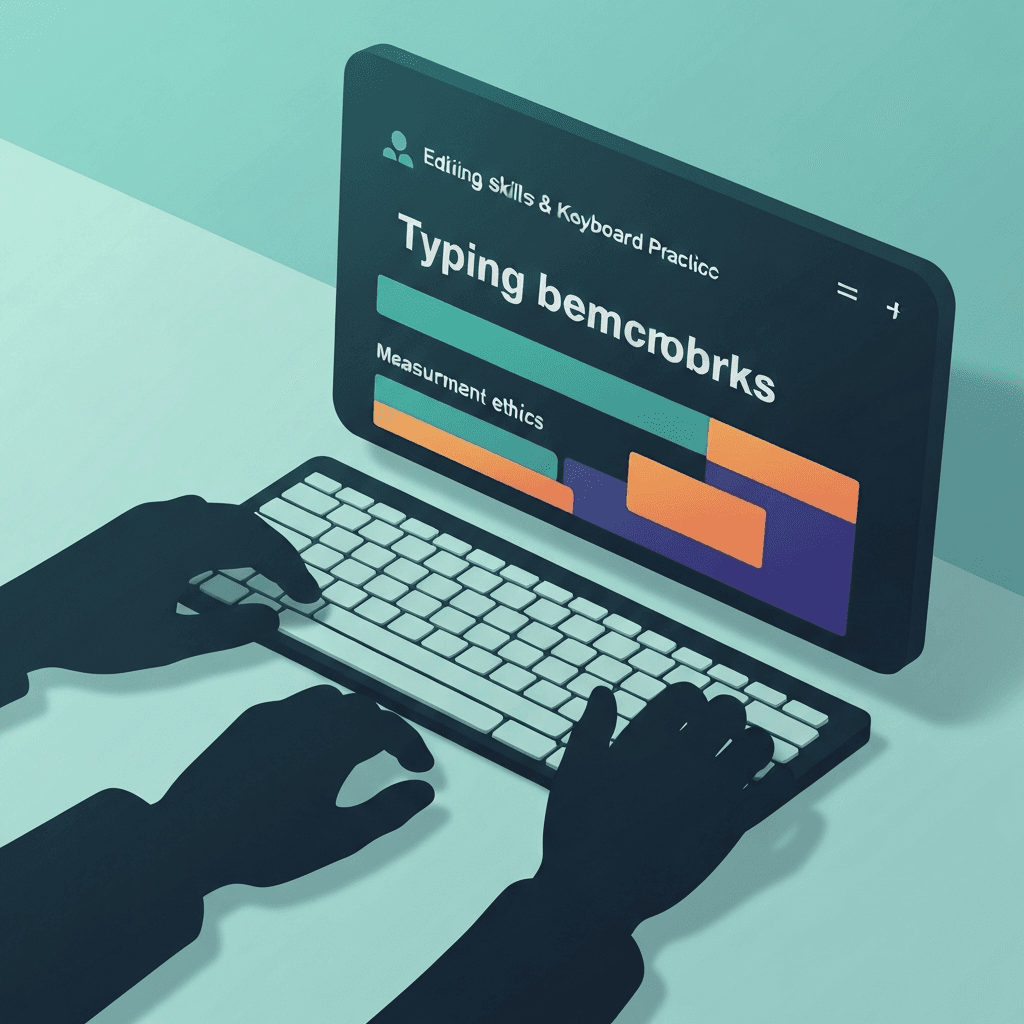
Muscle memory on fixed text is real skill, not magic
Repeating a passage trains lookahead and finger sequencing that transfers partially to fresh prompts.
If you only ever repeat one paragraph, your reported WPM stops predicting general workplace throughput.
Share context-tool output with coaches instead of isolated peaks so feedback targets habits, not ego.
If social posts trigger envy, mute them for two weeks and rely on your own histogram instead.
Try the WPM in context tool
Type any gross WPM from a timed test (or tap a preset) to see the same approximate percentile band language as your Type Faster results—not a competitive leaderboard rank.
Open WPM in contextRotate prompts weekly for honest charts
Keep a list of five benchmark excerpts and cycle them so gains reflect technique rather than verbatim recall.
Log whether a run was first sight or memorized in your notes next to the WPM column.
Log net versus gross when your employer cares; practicing the wrong rule trains the wrong reflexes.
If two sites disagree by more than a few WPM, compare their word rules before you buy a new keyboard.
Context bands still apply to memorized runs
The labs helper describes population-style placement; memorization shifts you along your own curve more than public percentiles.
Pair repeated passages with cold reads so interviews do not surprise you.
If two sites disagree by more than a few WPM, compare their word rules before you buy a new keyboard.
When remote work interrupts rhythm, shrink session length instead of abandoning benchmarks entirely.
Continue practicing
This cluster is about reading WPM honestly. Use the labs helper to place gross scores from timed tests into the same approximate bands as your results screen, then rerun benchmarks weekly.