- 4/8/2026
- Updated 4/8/2026
Numpad Finger Placement and Home Keys: Technique That Scales
Improve numpad speed by using consistent finger placement and home-key discipline that reduces hand drift and mis-hits.
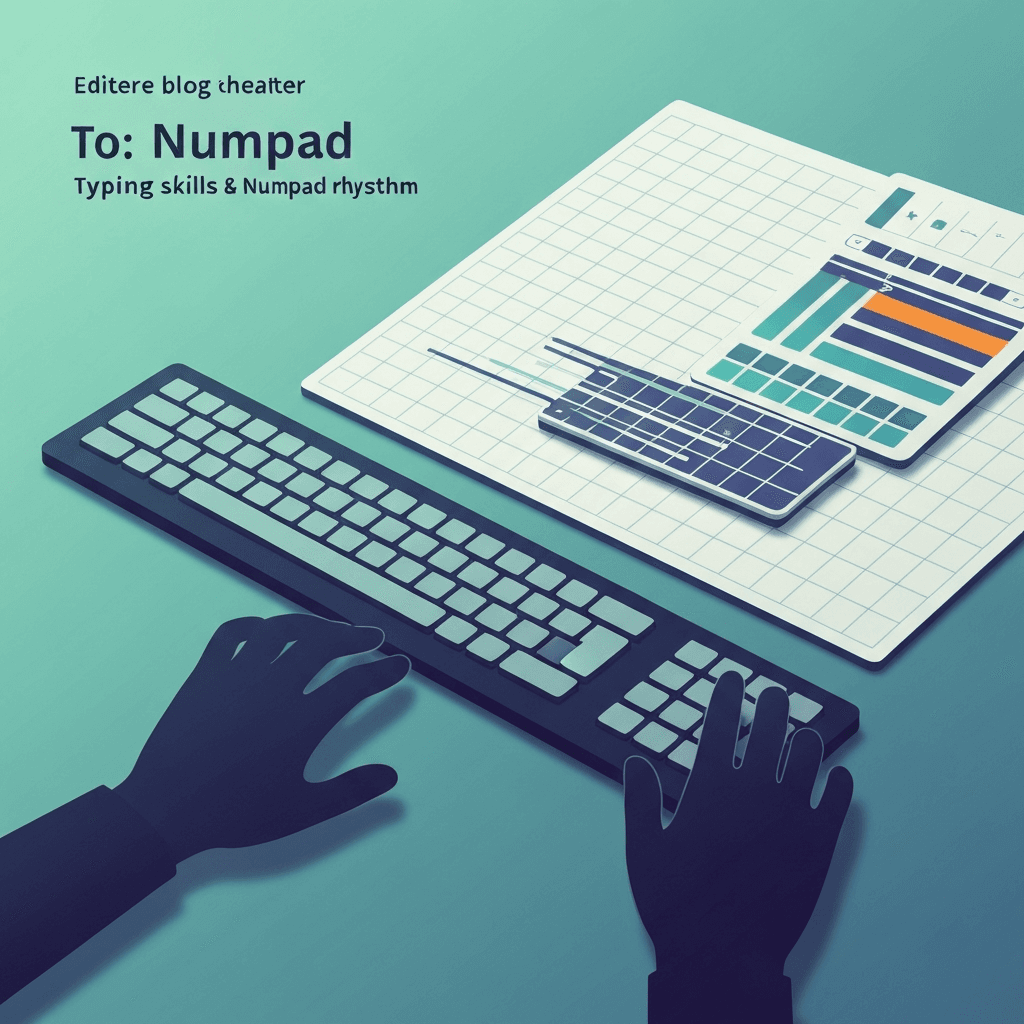
Consistency beats improvisation
Stable finger mapping lowers cognitive load, letting you focus on sequence quality instead of key search.
Frequent remapping increases drift and usually shows up as avoidable errors under moderate speed pressure.
Currency and decimal drills should match your locale: period versus comma decimals change muscle memory more than raw digit speed.
Blind numpad training temporarily lowers speed; keep sessions short and end on a clean moderate run so confidence returns with accuracy.
Interactive Practice
Try this numpad tool right here
Run the same test discussed in this article without leaving the page.
Use light touch and short travel
Heavy strikes increase fatigue and make long sessions less stable, especially near the end of runs.
Controlled actuation with minimal lateral movement supports both speed and precision over time.
KPH and WPM only compare fairly on the same platform—log employer test rules, then mirror timing, backspace policy, and field shapes in practice.
Mix short timed sets with pattern drills so your technique and performance metrics improve together, not in isolation.
Continue practicing
The in-page typing tool uses numpad mode. Open the dedicated numpad test for a full-screen run, or check the numpad leaderboard for your rank.